Skincare SOS: How To Restore Skin Barrier Quickly

A skincare routine that once worked perfectly can suddenly leave your face feeling tight, red, and irritated. That frustrating experience often points to a compromised skin barrier. Learning how to restore skin barrier health can help bring back comfort, hydration, and resilience. The good news is that recovery does not require dozens of products. A simple, consistent approach can make a remarkable difference.
Key Takeaways
- A damaged skin barrier often results from overusing active ingredients and harsh skincare products.
- Ceramides, niacinamide, and hyaluronic acid are key ingredients that support barrier recovery.
- Most skin barriers begin improving within 3 to 6 weeks with consistent care.
- A minimalist skincare routine is often more effective than a complicated one.
- Daily sunscreen protection helps prevent further damage during the healing process.
Why Your Skin Barrier Deserves Attention
Your skin works hard every day. It faces pollution, UV rays, weather changes, makeup, and countless environmental stressors. The skin barrier is the protective shield that helps keep all those aggressors out while locking moisture in.
Ignoring early signs of damage can lead to increased sensitivity, dehydration, and irritation. Understanding how to restore skin barrier function early can help prevent long-term skin concerns and keep your complexion balanced and healthy.
The Skin’s Built-In Bodyguard
Think of your skin barrier as your skin’s personal security team. It constantly protects against external threats while maintaining hydration levels beneath the surface.
Why It Breaks Down
Over-exfoliation, frequent use of retinol, strong acids, harsh cleansers, hot water, and environmental stress can gradually weaken this protective layer.
Understanding A Damaged Barrier
Recognizing the warning signs early makes recovery much easier and faster.

Common Symptoms To Watch For
A damaged skin barrier often causes redness, dryness, flaking, itching, and increased skin sensitivity. Products that previously felt comfortable may suddenly sting or burn.
Hidden Signs People Miss
Some people notice excessive oiliness instead of dryness. This happens because the skin attempts to compensate for lost moisture by producing more oil.
Why Recovery Matters
Without proper repair, a weakened barrier can make the skin more vulnerable to irritation, inflammation, and moisture loss.
The 4-Step Repair Plan
Restoring your moisture skin damage starts with simplifying your routine and supporting the skin’s natural healing process.
Step 1: Strip Back Your Routine
The first step is to remove anything that may be contributing to irritation. Stop using retinol, AHAs, BHAs, Vitamin C serums, and other active ingredients temporarily.
Avoid physical scrubs, heavily fragranced products, and essential oils. These ingredients can worsen sensitivity and delay healing.
Use only lukewarm water when cleansing. Hot water strips natural oils and increases inflammation, making recovery more difficult.
Step 2: Focus On Barrier-Building Ingredients
Your skin needs ingredients that help rebuild its protective structure. Ceramides act like the mortar between skin cells and strengthen the skin barrier.
Niacinamide helps calm redness and supports the production of natural lipids. Hyaluronic acid and glycerin attract moisture to the skin, improving hydration and comfort.
Look for moisturizers specifically formulated to support barrier repair and maintain healthy moisture levels.
Step 3: Lock In Every Drop Of Moisture
For severely dry or irritated skin, adding an occlusive layer at night can be helpful. This technique is often called slugging.
Apply a thin layer of petroleum jelly or a shea butter-based balm over your moisturizer. This creates a protective seal that reduces transepidermal water loss while the skin heals.
The result is often softer, calmer skin by morning and improved moisture retention over time.
Step 4: Protect And Stay Consistent
Sun protection is essential while your skin barrier recovers. Choose a mineral sunscreen containing zinc oxide or titanium dioxide to minimize irritation.
Consistency matters more than speed. Skin cells typically take around 28 days to complete a turnover cycle, so patience is essential throughout the healing process.
Recovery Timeline Explained
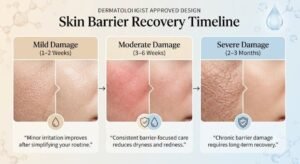
Healing does not happen overnight. The severity of damage plays a major role in determining recovery time.
Mild Damage
Minor irritation caused by temporary over-exfoliation may improve within one to two weeks after simplifying your routine.
Moderate Damage
Persistent dryness, redness, and sensitivity often require three to six weeks of dedicated barrier-focused care.
Severe Damage
Extensive irritation or chronic barrier disruption may take two to three months before the skin fully regains its strength and resilience.
Barrier-Friendly Products Worth Considering
Choosing supportive products can make the recovery process smoother and more comfortable.
Moisturizers That Rebuild
Products formulated with ceramides, lipids, and peptides help reinforce the skin barrier while improving hydration and texture.
Soothing Recovery Balms
Balms containing panthenol, also known as Vitamin B5, can help calm irritation and support the skin’s natural repair process.
Protective Daily Creams
Fragrance-free restorative creams can soothe discomfort, support the skin microbiome, and provide long-lasting moisture throughout the day.
Simple Daily Routine For Healing Skin
Keeping your routine simple allows your skin to focus its energy on repair.
Morning Routine
Start with a gentle cleanser or water rinse. Follow with a hydrating serum, barrier-repair moisturizer, and mineral sunscreen.
Evening Routine
Cleanse gently and apply a nourishing moisturizer rich in ceramides and fatty acids. If needed, finish with a thin occlusive layer.
Lifestyle Habits That Help

Adequate sleep, stress management, hydration, and a nutrient-rich diet can support healthy skin function from within.
Signs Your Skin Is Recovering
Watching for positive changes can help reassure you that your efforts are working.
Less Redness And Stinging
Reduced irritation is often one of the first signs of improvement.
Better Hydration Levels
Your skin begins retaining moisture more effectively and feels less tight throughout the day.
Improved Product Tolerance
Products that once caused discomfort may gradually become easier for your skin to tolerate.
Frequently Asked Questions
1. What Are Signs Of A Damaged Skin Barrier?
Common signs include persistent dryness, redness, irritation, tightness, flaking, itching, and increased sensitivity. Many people also notice that products they previously tolerated begin causing stinging or burning sensations.
2. Will A Damaged Skin Barrier Heal Itself?
A mildly damaged skin barrier can recover naturally over time, but healing is usually much faster when irritants are removed and supportive skincare ingredients are used consistently.
3. How Long Does It Take To Restore Skin Moisture Barrier?
Most people notice improvements within three to six weeks. More severe damage may require two to three months of consistent care before the skin barrier fully recovers.
4. What Vitamins Repair Skin Barrier?
Vitamin B3 (niacinamide), Vitamin B5, Vitamin E, and Vitamin D all play supportive roles in maintaining skin barrier function, reducing inflammation, and improving moisture retention.
Happy Skin, Happy You
Learning how to restore skin barrier health is one of the most valuable skincare skills you can develop. By simplifying your routine, avoiding irritants, using barrier-supporting ingredients, and staying patient, you give your skin the opportunity to repair itself naturally. Consistent care, proper hydration, and daily sun protection can help you maintain a stronger, healthier skin barrier for years to come.