How To Keep Kitchen Surfaces Clean And Safe: Daily tips
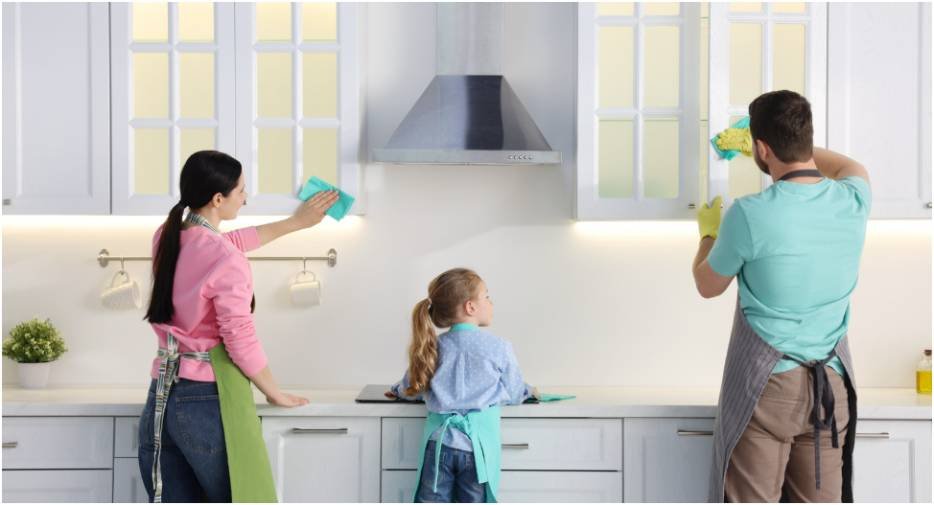
Kitchen germs do not politely stay near the cutting board. They travel on hands, faucet handles, fridge doors, dishcloths, knives, and even the spice jar grabbed halfway through cooking. That is why learning how to keep kitchen surfaces clean and safe starts with one simple habit: clean first, sanitize when needed, and reset the surfaces you touch most.
I use this system because it keeps the kitchen practical, not paranoid. A safe kitchen does not need constant chemical spraying. It needs better timing, cleaner tools, and smarter attention to high-touch areas.
My Simple Rule: Clean First, Sanitize Second
A shiny counter is not always a safe counter. Grease, crumbs, sauce, flour, and food residue can block sanitizers from working properly. I treat kitchen safety as a two-step process because each step does a different job.
Why Cleaning Alone Is Not Enough
Cleaning removes visible mess. Hot, soapy water works well for daily spills, sticky spots, crumbs, and most countertop grime. I use it before sanitizing because sanitizer should touch the surface directly, not sit on top of food residue.
Spraying sanitizer over a greasy counter may feel productive, but it often leaves hidden buildup behind. That is why I wipe first, then sanitize only when the situation calls for it.
When Sanitizing Matters Most
I sanitize after handling raw meat, poultry, seafood, eggs, trash lids, pet bowls, or dirty dishcloths. I also sanitize high-touch zones when someone in the house is sick or when I have cooked several dishes at once.
For toast crumbs or coffee drips, soap and water usually do the job. For chicken juice near the sink, sanitizing is not optional.
A Daily Kitchen Surface Routine That Works
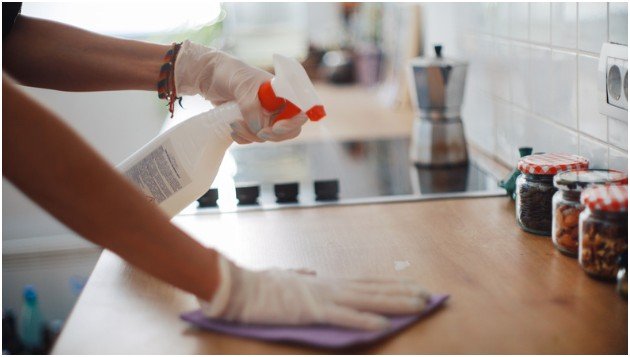
My routine is simple because complicated cleaning plans rarely survive a busy week. I split the day into three resets: morning, after cooking, and night.
Morning Reset
In the morning, I clear the main prep area before making breakfast. I put away dishes, remove mail, and wipe the counter with hot, soapy water. This gives me a clean surface before food, lunchboxes, or coffee supplies come out.
If dust settles quickly after cleaning other rooms, I connect this habit with how to reduce dust and allergens at home so dust and debris do not keep landing on food-prep areas.
After-Cooking Reset
After cooking, I wipe spills immediately. Oil, tomato sauce, raw egg, flour, and fruit juice are easier to remove before they dry. I clean around the stove, sink edge, cutting board area, and any surface that touched grocery packaging.
When raw meat is involved, I clean first, apply a food-safe sanitizer, follow the label’s contact time, and let the surface air dry.
Nightly Counter Sweep
Before bed, I clear the counters fully. I move the toaster, wipe under small appliances, clean faucet handles, and dry the sink ledge. This nightly sweep stops crumbs from attracting pests and gives me a fresher kitchen the next morning.
High-Touch Zones Most People Forget
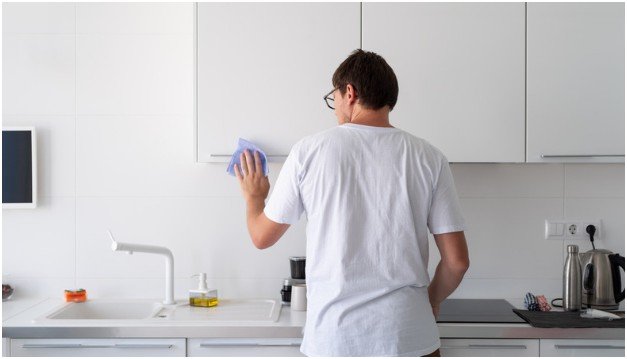
Counters get attention. The sneaky surfaces often do not. My kitchen got cleaner when I started wiping the things I touch while cooking, not only the places where food sits.
Spice Jars, Handles, and Appliance Buttons
A Rutgers food-safety study found spice containers were contaminated 48% of the time during a ground turkey meal-prep experiment. That finding made perfect sense to me. I touch the meat, grab seasoning, open the fridge, turn the faucet, and press microwave buttons.
Now I wipe spice jars, fridge handles, drawer pulls, faucet handles, stove knobs, and appliance buttons after messy cooking. This one habit closes a major gap in kitchen surface safety.
Cloths, Sponges, and Scrubbers
I stopped relying on one kitchen sponge for everything. Sponges stay damp, collect food bits, and can spread germs across clean-looking surfaces. I prefer washable microfiber cloths for counters and silicone scrubbers for stuck-on messes.
I change cloths daily and keep separate cloths for dishes, counters, and floors. A cloth that wiped raw meat juice should never touch tomorrow’s breakfast counter.
Surface-Specific Care for Common Countertops
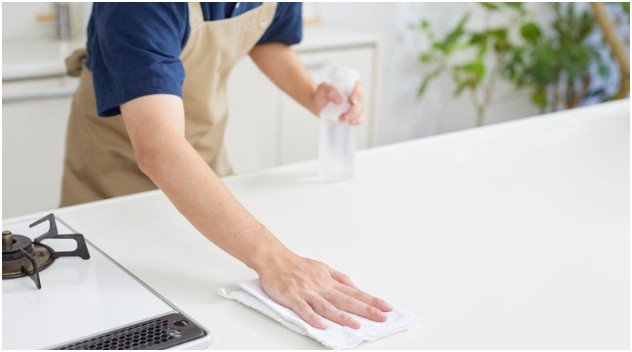
The safest cleaning routine protects both your food and your surfaces. A harsh cleaner may kill germs, but it can also scratch laminate, dull stone, or dry out wood.
Quartz, Laminate, Granite, and Marble
For quartz and laminate, I use mild dish soap and warm water for daily cleaning. I avoid abrasive powders, steel wool, and rough scrubbing pads because they can damage the finish.
Granite and marble need gentler care. I use pH-neutral cleaners and avoid vinegar, lemon juice, and acidic products. Natural stone can stain or etch, so sealing matters. If water darkens the stone quickly, it may be time to reseal it.
Stainless Steel, Wood, and Butcher Block
For stainless steel, I wipe with the grain. This reduces streaks and keeps the surface looking polished. Around the sink, I dry the steel after cleaning because water spots build up fast.
For wood and butcher block, I clean with soap and water, dry the surface well, and treat it with food-grade mineral oil monthly. I never leave wet towels sitting on wood because moisture can cause warping, odors, and stains.
Cross-Contamination Prevention During Meal Prep
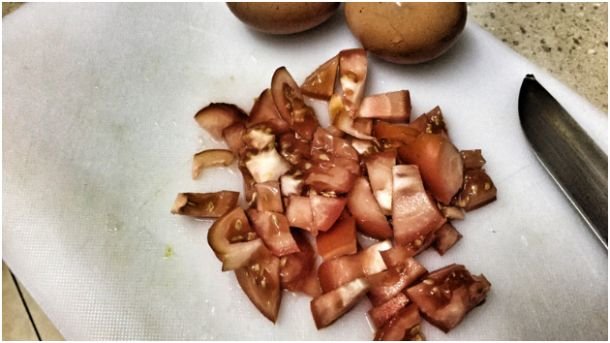
Cross-contamination is the real reason kitchen surfaces need a system. Bacteria can move from raw food to hands, from hands to handles, and from handles back to ready-to-eat food.
My Raw-Meat Prep Example
When I prep raw chicken, I place it on one cutting board and keep vegetables on another. I season with clean hands or pre-measure spices into a small bowl before touching the meat. That tiny step keeps spice jars out of the danger zone.
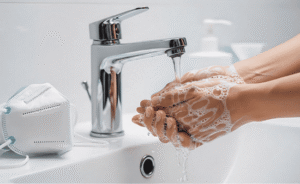
After the chicken goes into the pan, I wash my hands for 20 seconds. Then I clean the cutting board, knife, counter, faucet handle, and any cabinet pull I touched. After that, I sanitize the prep area and let it air dry.
Cutting Boards, Hands, and Food Contact Surfaces
I use separate cutting boards for raw meat and produce. Color-coded boards help, but labels work too. If a cutting board has deep grooves, I replace it because cuts can trap food residue.
I never place raw meat directly on the counter. I also avoid rinsing raw poultry because splashing water can spread bacteria to the sink, faucet, and nearby surfaces. Cooking to the right temperature is safer than spraying the kitchen with invisible droplets.
Safer Sanitizing Without Damaging Your Kitchen
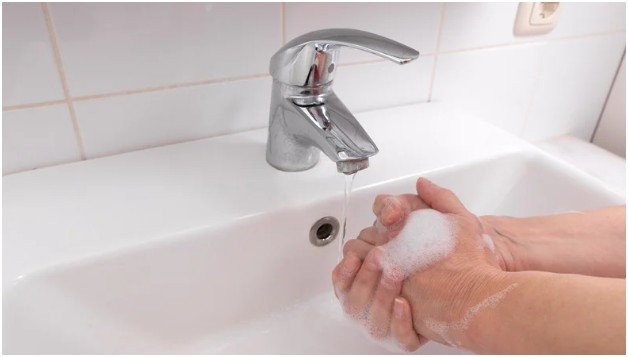
Knowing how to keep kitchen surfaces clean and safe also means knowing when to use sanitizer carefully. More product does not mean more safety. The label matters.
Food-Safe Sanitizers and Contact Time
I use food-safe sanitizers on food-contact surfaces and follow the contact time on the product label. Some products need the surface to stay wet for a set time before they work properly.
For bleach solutions, I use unscented household bleach only when the label allows it for sanitizing. I never guess the ratio. I mix it fresh, keep the room ventilated, and let the surface air dry unless the label says to rinse.
What Not to Mix or Use
I never mix bleach with vinegar, ammonia, or other cleaners. That is not a cleaning shortcut; it is a chemical hazard. I also avoid using bathroom disinfectants on cutting boards or food-prep tools unless the label clearly says they are safe for food-contact surfaces.
Vinegar can help with some mineral deposits and light grime, but I do not rely on it as my main sanitizer. For food safety, I want a product designed for that job.
FAQ
1. What is the best way to clean kitchen counters daily?
Use hot, soapy water, wipe with a clean cloth, dry the surface, and sanitize only when food safety risks are present.
2. How often should I sanitize kitchen surfaces?
Sanitize after raw meat, seafood, eggs, illness, risky spills, or heavy cooking sessions.
3. Can I use vinegar to sanitize kitchen counters?
Vinegar can clean some grime, but use a food-safe sanitizer when you need reliable germ reduction.
4. How do I keep kitchen surfaces clean and safe with kids at home?
Clean spills fast, sanitize high-touch areas, store chemicals safely, and keep raw foods away from ready-to-eat snacks.
Your Counters Are Not a Crime Scene, Keep Them That Way
I do not want my kitchen to feel like a lab, but I also refuse to let yesterday’s chicken prep haunt today’s sandwich. The best method is simple: clean visible mess, sanitize real risk, and reset the overlooked touch points.
Start with tonight’s counter sweep. Clear the clutter, wash the prep zone, wipe the handles, and give those spice jars the side-eye they deserve.